
 EN
EN
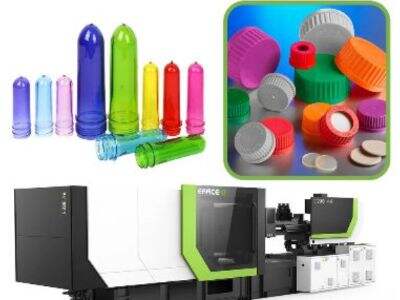
Maintaining the right temperature and humidity level in your PET molding facility is key to maintaining product quality. EFFICIENT provides answers to keep these under control easily.
How to Control Humidity in Your PET Molding Facility
The proper level of humidity is also vital for your PET production facility. High humidity can result in the eventual products being flawed, and too low humidity will make it prone to static electricity. Below are some techniques for managing humidity:
Dehumidify the air with dehumidifiers.
Provide effective mechanisms of ventilation to control air flow.
Humidity levels should be checked often, and modified as necessary.
Keep materials stored in a dry location to avoid mildewing.
Train your staff on the value of humidity control and what they can do to regulate it effectively.
Temperature and Humidity Control for PET Production
EFFICIENT is a wholesaler that can help regulate the temperature and humidity in your PET plant. Create perfect products Our equipment is to control those things above so your product isn't impacted adversely. You will be able to with our temperature control and humidity control units:
Keep all parts of the building equally warm.
Maintain moisture level and avoid defects to keep products in quality.
Enhance productivity by ensuring ideal working conditions.
Keep energy costs low with ideal temperature and humidity climate control.
Enhance product quality and customer satisfaction through controlled environmental conditions.
With EFFICIENT, you can easily control PET molding shop temperature & humidity—which results in higher production levels and happier customers!
Common Temperature And Humidity Problems In PET Molding Machine And How To Solve Them
Temperature and humidity are important in a PET molding shop. Some common problems include uneven quality of parts, deformation and shrinkage of parts or slow cycle time. To solve these problems, first, the optimal condition for PET molding needs to be determined.
The best solution for temperature concerns is to get a quality cooling system. Consistent temperature to avoid these problems, keep your PET at a uniform temperature when molding to allow it to cool and harden uniformly. The regular check on temperatures inside the molding shop and making changes when necessary would allow to keep hold of an ideal state of production.
The humidity can affect the quality of PET molds. The material gets damp and deforms due to high humidity, resulting in defects in the finished product. The solution is obvious: we need a dehumidification system to monitor the amount of moisture in the air. With operation in the proper range, issues like bad surface finish or molded parts cracking can be avoided.
How to Maximise Ambient Conditions For PET, OPET by:
In order to maximize the surrounding conditions for PET production, it is essential to develop a controlled area within the molding shop. This can be accomplished by insulating to help control temperature changes and keep the elements outside from having any impact on production. And, turn on the air or heat to keep it a more even temperature around the shop.
Then, the correct ventilation is essential for optimal ambient conditions in the PET manufacturing process. Good air circulation and humidity control inside the molding shop will stop mold heats from absorbing, also employees will have a comfortable work environment! Frequent cleaning and servicing of air filters also improves the working environment and prevents temperature and humidity issues.
Why Do I Need to Control Temperature and Relative Humidity in PET Molding?
Control of temperature and humidity during PET moulding is very important for product quality, improving production efficiency and reducing scrap. You can avoid the problems such as production of defective final product, slow rate of output and high rejection ratio by keeping good conditions in molding shop. In addition, the equipment life can be prolonged and long-term electricity costs for maintenance of the fan, for example, reduced by controlling temperature and humidity.
In all, good control of temperature and humidity is an important factor for obtaining uniform quality results in PET molding. Utilizing high quality cooling and dehumidification equipment, maximizing facility conditions, and actively monitoring and controlling temperature and humidity levels can provide a well-conditioned environment that supports productive PET production.
Table of Contents
- How to Control Humidity in Your PET Molding Facility
- Temperature and Humidity Control for PET Production
- Common Temperature And Humidity Problems In PET Molding Machine And How To Solve Them
- How to Maximise Ambient Conditions For PET, OPET by:
- Why Do I Need to Control Temperature and Relative Humidity in PET Molding?