
 EN
EN

Inventory Upgrade and Green Transformation: An In-Depth Look at the Preform Injection Molding Machine Industry in 2026
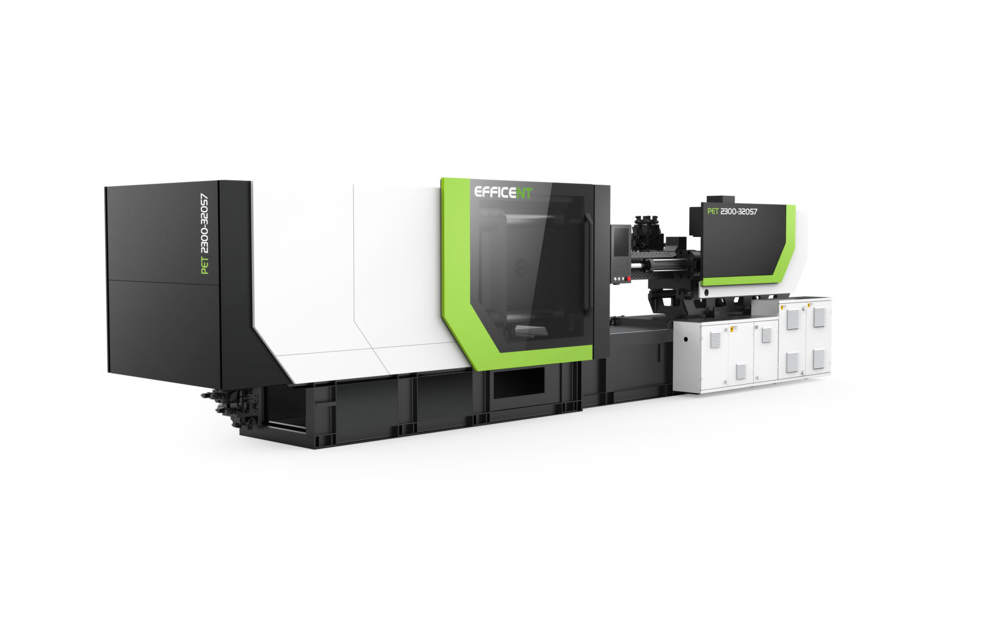
Within the broader landscape of plastic packaging, the preform injection molding machine—a core piece of equipment for producing PET bottles—serves as a direct barometer for technological shifts and the health of the fast-moving consumer goods (FMCG) sector. As we progress through 2026, both the global and Chinese markets for these machines are undergoing a significant transformation. This change is driven by three core pillars: higher speed and efficiency, reduced energy consumption, and the principles of a circular economy. The market is no longer simply expanding in scale; it has entered a new cycle where upgrading existing capacity goes hand-in-hand with a green transition.
I. Market Size: Steady Growth, with Incremental Gains Concentrated at the High End
Looking at the macro data, the global preform injection molding machine market maintains a steady, albeit modest, growth trajectory. According to the latest data from QYResearch, global sales volume in 2024 was approximately 805 units, with an average global market price hovering around $984,000 per unit . Looking ahead, market research firms project the global market size could reach approximately $1.087 billion by 2032, with a Compound Annual Growth Rate (CAGR) maintained at around 4.7% between 2026 and 2032 . Another firm, Wenke Hui, estimates 2026 global sales at $937 million, projecting growth to $1.291 billion by 2033 at a CAGR of 4.68% .
These figures reveal a key signal: the engine of market growth has shifted from "quantity" to "quality." While volume growth appears modest, the unit value, particularly for high-end models, is increasing. This is especially evident in the Chinese market. Driven by the deepening implementation of the 14th Five-Year Plan and supply chain restructuring pressures from 2025 tariff adjustments, the domestic demand for high-precision, high-efficiency machinery is intensifying . The traditional low-to-mid-end market is nearing saturation, while high-cavitation (>100 cavities), fully electric-driven high-end preform machines have become the new profit growth area .
II. Core Drivers: A Trio of Forces Shaping Industrial Upgrades
The current state of the preform injection molding machine industry is primarily shaped by the following three engines:
1. The Demand for Lightweighting and High-Speed Production
As beverage producers push for extreme unit cost control, preform production is trending towards "thinner walls, lighter weight, and faster cycles." To reduce resin usage while maintaining bottle structural integrity, equipment must offer higher injection precision and speed. This drives the market to phase out older hydraulic machines in favor of new models equipped with advanced hot runner systems, servo-driven injection units, and rapid cooling technologies. For instance, meeting the high-speed production demands for 72 to 144-cavity molds is a primary driver for the adoption of high-end equipment .
2. The Technical Challenge Posed by Recycled PET (rPET)
Global circular economy initiatives are fundamentally reshaping equipment technical standards. Extended Producer Responsibility (EPR) regulations implemented by various governments, coupled with FMCG giants' commitments to using 25-50% rPET, force preform manufacturers to handle materials with flow, viscosity, and thermal stability characteristics different from virgin resin .
This places higher demands on injection molding machines: traditional machines struggle to process high percentages of rPET consistently. Consequently, in 2026, rPET compatibility has become a baseline requirement for new equipment. This necessitates machines with upgraded plasticizing units, efficient filtration systems, and closed-loop process controls to manage impurities and viscosity variations in the melt .
3. Energy Efficiency, Environmental Protection, and the Shift to Smart Manufacturing
In the context of global "carbon peak and neutrality" goals, energy consumption metrics have become a key factor in customer procurement decisions. All-electric and hybrid injection molding machines are gaining significant market share due to their notable energy savings (30-50% less compared to traditional hydraulic models) and superior control precision . Concurrently, smart features like digital monitoring and predictive maintenance are becoming more common, helping packaging companies reduce costs and improve efficiency .
III. Competitive Landscape: Regional Players vs. Global Giants
From a competitive ecology perspective, the global preform injection molding machine market exhibits a "pyramid" structure.
At the apex are international giants like Husky Injection Molding Systems, SIPA, SACMI, KraussMaffei Group, and Nissei ASB Machine . Leveraging deep technological expertise, they dominate the top tier of the market—high cavitation (>100 cavities), ultra-high speed, and exceptional stability. Particularly in turnkey solutions and high-end custom applications, their brand moats are formidable. For example, Husky is practically synonymous with high-end preform systems in the industry.
The base and middle of the pyramid consist of numerous local Chinese brands (such as Huayan Precision Machinery, Haixiong Plastic Machinery, Baogie Precision Machinery, etc.) and companies from the Taiwan region of China . In recent years, local players have made significant strides, achieving import substitution in the mid-cavitation range (50-100 cavities) and beginning to penetrate international markets. However, it should be noted that although domestically produced equipment has obvious advantages in cost performance and service response speed, it still lags behind international leading brands in cutting-edge fields such as stability in processing rPET, ultra-high-speed cycle time, and extreme thin-wall molding.
IV. Challenges Ahead and Future Outlook
Despite the optimistic outlook, the industry is not without its challenges.
First, volatility in raw material prices and supply chain uncertainties remain a Sword of Damocles. Since 2025, global trade frictions and tariff policy adjustments have pressured the costs of core imported components like high-end CNC systems and hydraulic servo valves .
Second, technological barriers are continuously rising. As the packaging industry intensifies its internal competition, customer demands regarding Overall Equipment Effectiveness (OEE) are becoming extremely stringent. This requires equipment suppliers not only to provide hardware but also to possess process expertise and system integration capabilities.
Looking ahead to the coming years, the landscape for the preform injection molding machine industry will likely be characterized by two major trends:
• Deepening Application in Niche Segments: Beyond the traditional markets of drinking water and carbonated soft drinks, demand from high-end sectors such as pharmaceutical packaging, personal care, and cosmetics is expected to outpace the industry average. These applications demand higher cleanroom standards and precision, opening up new blue ocean markets.
• Circular Economy Driving Technological Revolution: With the advancement of chemical recycling technologies and the potential demand for multi-layer preforms, future preform machines may need to handle a more diverse mix of materials. Flexible manufacturing systems capable of adapting to new processes and materials will become a key competitive advantage in the next round of evolution.
In summary, the preform injection molding machine industry in 2026 stands at a critical juncture—a transition from large-scale manufacturing to sophisticated, green, and intelligent production. For machinery manufacturers, the key to securing future market leadership lies in who can advance energy-saving technologies the furthest and who can achieve seamless compatibility with recycled materials.