
 EN
EN

การวิเคราะห์ตลาดเครื่องขึ้นรูปด้วยการฉีดขึ้นรูปแบบ PET Preform ในภูมิภาคอเมริกากลางและอเมริกาใต้ (2024–2026)
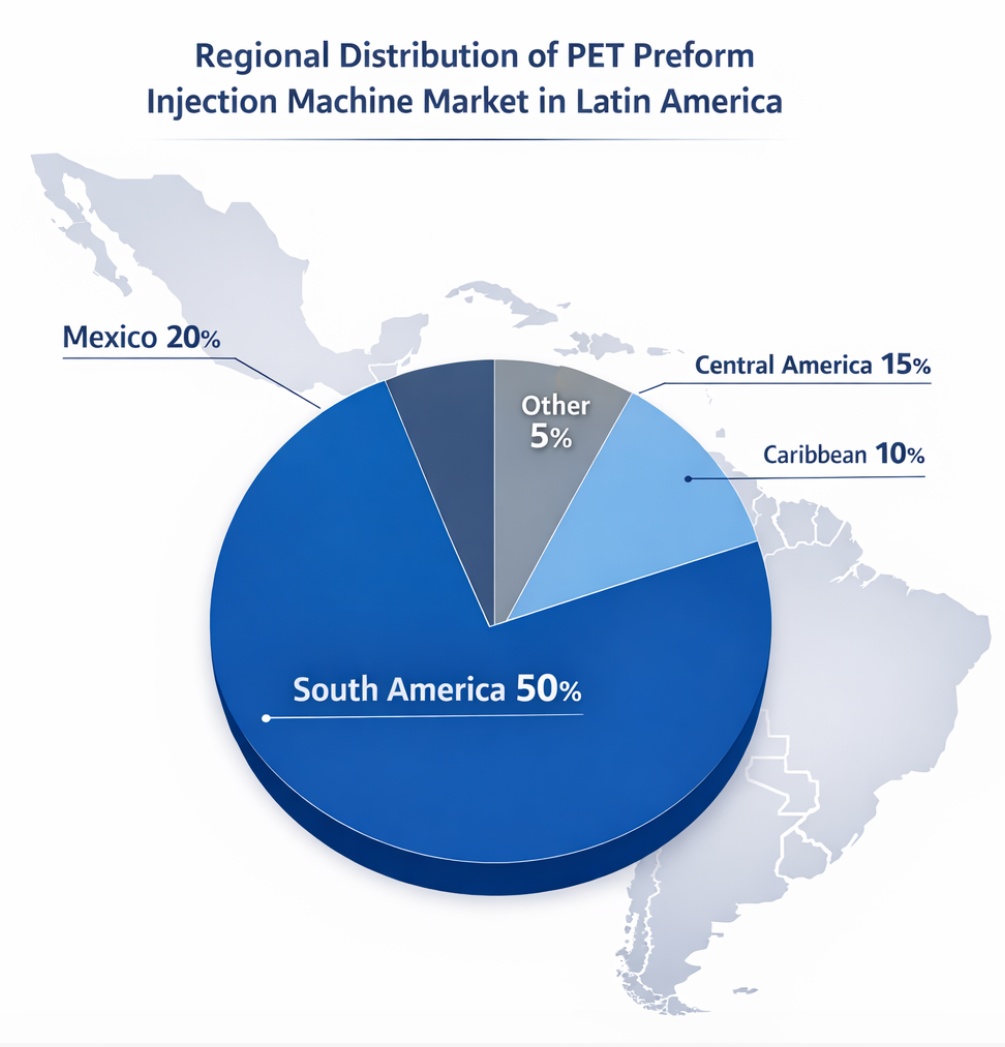
1. ภาพรวมตลาด
ในช่วงไม่กี่ปีที่ผ่านมา ด้วยการพัฒนาอย่างต่อเนื่องของอุตสาหกรรมบรรจุภัณฑ์ทั่วโลก ผลิตภัณฑ์ PET Preform ได้กลายเป็นส่วนประกอบสำคัญในการบรรจุภัณฑ์เครื่องดื่ม อาหาร และผลิตภัณฑ์เคมีสำหรับใช้ในครัวเรือน ส่งผลให้ความต้องการเครื่องขึ้นรูปฉีดแบบ PET Preform เพิ่มขึ้นอย่างต่อเนื่อง
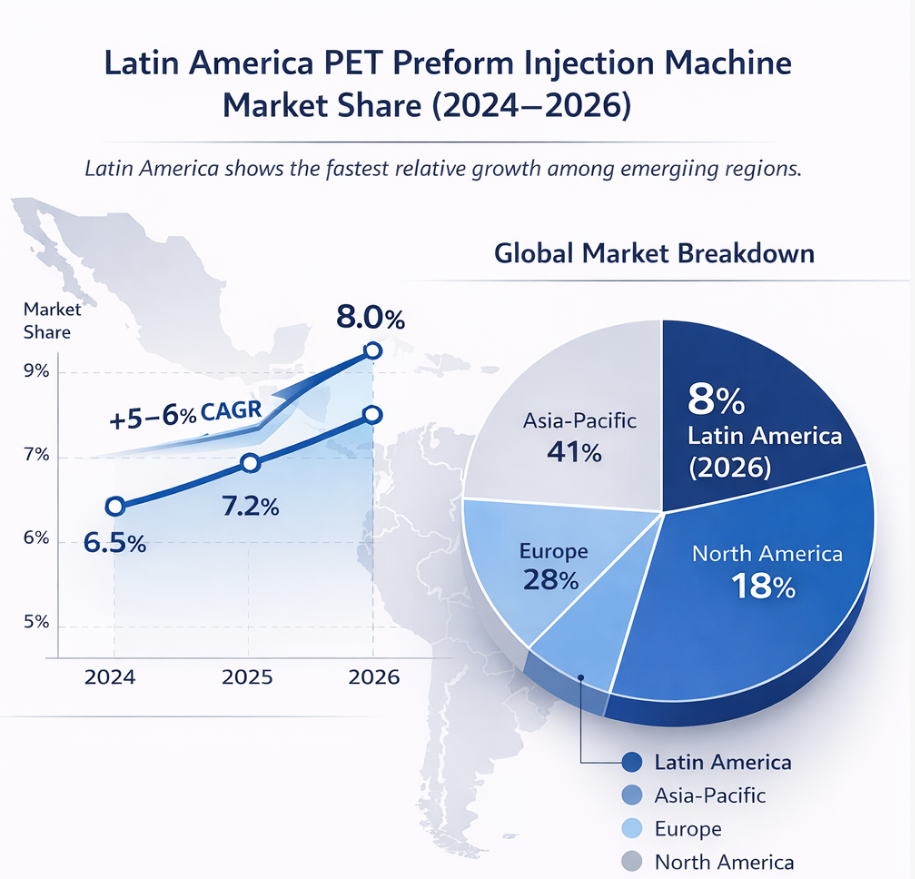
เมื่อเปรียบเทียบกับตลาดที่มีความพร้อมแล้ว เช่น เอเชีย ยุโรป และอเมริกาเหนือ ภูมิภาคอเมริกากลางและอเมริกาใต้ (ละตินอเมริกา) ยังคงมีสัดส่วนค่อนข้างเล็กในตลาดโลก โดยคิดเป็นประมาณ 5%–7% อย่างไรก็ตาม ภูมิภาคนี้กำลังเป็นหนึ่งในตลาดเกิดใหม่ที่เติบโตเร็วที่สุดในปัจจุบัน และมีศักยภาพในการพัฒนาอย่างแข็งแกร่ง
ประเทศต่างๆ เช่น บราซิล เม็กซิโก และอาร์เจนตินา กำลังประสบกับการขยายตัวอย่างต่อเนื่องของอุตสาหกรรมบรรจุภัณฑ์เครื่องดื่ม น้ำดื่มบรรจุขวด และอาหาร ซึ่งส่งผลโดยตรงต่อความต้องการอุปกรณ์การผลิต PET Preform
2. ขนาดตลาดและส่วนแบ่งตลาด
จากผลการสังเกตตลาดล่าสุด:
- 2023: ระยะฟื้นตัวของตลาด
- 2024: ความต้องการเพิ่มขึ้นอย่างมาก
- 2025: การขยายตัวต่อเนื่อง
อัตราการเติบโตเฉลี่ยต่อปีในภูมิภาคนี้คาดว่าจะอยู่ที่ 5%–8% ซึ่งสูงกว่าอัตราการเติบโตของบางตลาดที่พัฒนาแล้ว
ส่วนแบ่งตลาดเครื่องฉีดขึ้นรูปขวด PET ทั่วโลก (2024)
เอเชีย ██████████████████████ 40%+
อเมริกาเหนือ ████████████ 25%+
ยุโรป █████████ 20%
อเมริกาลาติน ███ 5%~7%
ตะวันออกกลางและแอฟริกา ██ 3%~5%
เนื้อหาภาพที่แนะนำ:
- เอเชีย: มากกว่า 40%
- อเมริกาเหนือ: 25%
- ยุโรป: 20%
- ละตินอเมริกา: 5%–7%
- ตะวันออกกลางและแอฟริกา: 5%
โครงสร้างนี้แสดงให้เห็นอย่างชัดเจนว่า แม้ละตินอเมริกายังไม่ใช่ตลาดหลักในปัจจุบัน แต่ก็มีศักยภาพในการเติบโตที่แข็งแกร่ง
3. การเปลี่ยนแปลงของตลาดในช่วงสองปีที่ผ่านมา
3.1 ปัจจัยขับเคลื่อนความต้องการ
การเติบโตของตลาดพรีฟอร์ม PET ในละตินอเมริกาเกิดจากปัจจัยหลักดังต่อไปนี้:
(1) การเพิ่มขึ้นของการบริโภคน้ำดื่มบรรจุขวด
ด้วยแนวโน้มการขยายตัวของเมืองและการตระหนักรู้ด้านความปลอดภัยของน้ำดื่มที่สูงขึ้น ความต้องการน้ำดื่มบรรจุขวดจึงยังคงเติบโตอย่างต่อเนื่อง และกลายเป็นส่วนประยุกต์ใช้งานที่ใหญ่ที่สุด
(2) การขยายตัวของอุตสาหกรรมเครื่องดื่ม
การบริโภคเครื่องดื่มคาร์บอเนต น้ำผลไม้ และเครื่องดื่มเพื่อสุขภาพกำลังเพิ่มขึ้น ส่งผลให้เกิดความต้องการบรรจุภัณฑ์ PET
(3) การผลิตในท้องถิ่น
บริษัทจำนวนมากขึ้นกำลังหันมาผลิตพรีฟอร์มในประเทศเพื่อลดต้นทุนด้านโลจิสติกส์และความเสี่ยงในห่วงโซ่อุปทาน
3.2 การปรับปรุงความต้องการอุปกรณ์
ความต้องการของลูกค้าได้เปลี่ยนแปลงไปอย่างมากในช่วงไม่กี่ปีที่ผ่านมา:
|
รายการ |
ก่อน |
ตอนนี้ |
|
ห้องว่าง |
24 / 48 |
72 / 96 |
|
อัตโนมัติ |
ต่ำ |
มาตรฐานพร้อมหุ่นยนต์ |
|
โฟกัส |
ราคา |
ต้นทุน + ประสิทธิภาพ |
ลูกค้าไม่ได้มุ่งเน้นเพียงราคาเครื่องจักรอีกต่อไป แต่ให้ความสำคัญกับสิ่งต่อไปนี้มากขึ้น:
- ต้นทุนต่อหน่วยผลผลิต
- ความมั่นคงของเครื่องจักร
- ประสิทธิภาพของเวลาในการทำงานหนึ่งรอบ
4. แนวโน้มของตลาด
4.1 ระบบแม่พิมพ์แบบหลายช่อง (High-Cavity Systems) กำลังกลายเป็นมาตรฐานทั่วไป
ในอีก 2–3 ปีข้างหน้า ตลาดจะยังคงเปลี่ยนผ่านสู่การเพิ่มผลผลิตให้สูงขึ้น:
- 72 ช่อง → รูปแบบมาตรฐาน
- 96 ช่อง → เติบโตอย่างรวดเร็ว
- 128 ช่อง → แนวโน้มใหม่ที่กำลังเกิดขึ้น
4.2 ความต้องการด้านประสิทธิภาพการใช้พลังงานเพิ่มขึ้น
ต้นทุนพลังงานในละตินอเมริกากำลังเพิ่มสูงขึ้น ทำให้ประสิทธิภาพการใช้พลังงานกลายเป็นปัจจัยสำคัญในการตัดสินใจซื้อ
ลูกค้ากังวลมากขึ้นเกี่ยวกับ:
- ระบบขับเคลื่อนเซอร์โว
- ประหยัดพลังงานได้มากกว่า 30%
- ค่าใช้จ่ายในการดำเนินงานระยะยาว
จุดเน้นกำลังเปลี่ยนผ่านจาก “ราคาเครื่องจักร” ไปสู่ “ต้นทุนรวมตลอดอายุการใช้งาน (Total Cost of Ownership)”
4.3 การทำให้เป็นระบบอัตโนมัติและการผลิตอัจฉริยะ
ด้วยต้นทุนแรงงานที่เพิ่มสูงขึ้น การทำให้เป็นระบบอัตโนมัติจึงกลายเป็นสิ่งจำเป็น
- ระบบหุ่นยนต์สำหรับการนำชิ้นงานออก (Robot take-out systems) ได้รับการใช้งานเป็นมาตรฐานแล้ว
- ระบบสายพานลำเลียงและระบบจัดการวัสดุได้รับการนำไปใช้อย่างแพร่หลาย
- ระบบควบคุมขั้นสูงมีความจำเป็นเพิ่มมากขึ้นเรื่อยๆ
ลูกค้าบางรายเริ่มนำเทคโนโลยีต่อไปนี้มาใช้งานด้วย:
- การติดตามทางไกล
- การวิเคราะห์ข้อมูลการผลิต
- การบํารุงรักษาแบบคาดการณ์
4.4 แนวโน้มด้านสิ่งแวดล้อม (rPET)
กฎระเบียบด้านสิ่งแวดล้อมกำลังเข้มงวดขึ้นอย่างค่อยเป็นค่อยไป เพื่อส่งเสริมการใช้พลาสติก PET ที่ผ่านการรีไซเคิล (rPET)
- การใช้วัสดุรีไซเคิลเพิ่มขึ้น
- เครื่องจักรต้องปรับตัวให้สอดคล้องกับกระบวนการแปรรูป rPET
- ข้อกำหนดที่สูงขึ้นสำหรับความเสถียรในการหลอมละลายพลาสติก
หัวใจสำคัญของการแข่งขันในอนาคต
มีประสิทธิภาพ ███████████
ประหยัดพลังงาน ██████████
ความคงที่ ██████████
อัตโนมัติ █████████
อัจฉริยะ ████████
เนื้อหาภาพที่แนะนำ:
แผนภูมิเรดาร์ ประกอบด้วย:
- ประสิทธิภาพ
- การประหยัดพลังงาน
- อัตโนมัติ
- ความคงที่
- ความสามารถปรับตัวต่อสิ่งแวดล้อม
5. ลักษณะของลูกค้า
5.1 ให้ความสำคัญกับราคา แต่มีเหตุผลมากขึ้น
ลูกค้ายังคงใส่ใจด้านราคา แต่ขณะนี้ให้ความสำคัญมากขึ้นกับ:
- ผลกําไรจากการลงทุน
- ความน่าเชื่อถือของเครื่องจักร
- ประสิทธิภาพการผลิตจริง
5.2 มีความชอบอย่างชัดเจนต่อกรณีศึกษาที่ได้รับการพิสูจน์แล้ว
ลูกค้าในลาตินอเมริกาให้ความสำคัญอย่างยิ่งกับกรณีศึกษาโครงการจริง:
- เวลาไซเคิลจริง
- สภาวะการปฏิบัติงานจริง
- กรณีการผลิตที่พิสูจน์แล้ว
เมื่อเปรียบเทียบกับข้อกำหนดทางเทคนิค กรณีศึกษาจริงมีน้ำหนักในการโน้มน้าวมากกว่า
5.3 ความชอบต่อโซลูชันแบบเทิร์นคีย์
ลูกค้าจำนวนมากขึ้นกำลังมองหาโซลูชันแบบครบวงจร แทนที่จะเป็นเครื่องจักรแบบแยกชิ้น โดยรวมถึง:
- เครื่องฉีดขึ้นรูป
- แม่พิมพ์
- หุ่นยนต์
- ระบบระบายความร้อน
โซลูชันแบบครบวงจรช่วยเพิ่มความสามารถในการแข่งขันได้อย่างมีนัยสำคัญ
6. ตัวอย่างภาพประกอบของระบบแม่พิมพ์สำหรับขวด PET
ระบบแม่พิมพ์ขวด PET แบบหลายโพรงสูง (โดยทั่วไปใช้สำหรับการผลิตแบบ 72–96 โพรง)
ระบบแม่พิมพ์ความแม่นยำสูงประเภทนี้มีความจำเป็นอย่างยิ่งต่อการบรรลุ:
- ประสิทธิภาพผลผลิตสูง
- คุณภาพผลิตภัณฑ์ที่สม่ำเสมอ
- การทำงานที่มั่นคงในระยะยาว
7. โอกาสทางการตลาด
7.1 โอกาสในการแทนที่ระดับกลางถึงสูง
แบรนด์จากยุโรปและอเมริกามีราคาแพง จึงสร้างโอกาสให้กับทางเลือกอื่นที่มีต้นทุนต่ำกว่า
ผู้ผลิตที่เสนอราคาแข่งขันได้พร้อมประสิทธิภาพที่เชื่อถือได้กำลังเพิ่มส่วนแบ่งการตลาด
7.2 ความต้องการอุปกรณ์ที่มีอัตราส่วนคุณภาพต่อราคาสูง
ลูกค้ากำลังมองหา:
- ต้นทุนการลงทุนที่สมเหตุสมผล
- ผลิตสูง
- การทํางานที่มั่นคง
เครื่องจักรที่สามารถสมดุลปัจจัยเหล่านี้ได้มีแนวโน้มประสบความสำเร็จมากกว่า
7.3 กลยุทธ์การขายที่ขับเคลื่อนด้วยกรณีศึกษา
โครงการที่ประสบความสำเร็จคือเครื่องมือการขายที่ทรงพลังที่สุด โดยเฉพาะเมื่อ:
- สภาวะการปฏิบัติงานมีความคล้ายคลึงกัน
- ข้อมูลประสิทธิภาพชัดเจน
- ผลลัพธ์ได้รับการพิสูจน์แล้ว
8. สรุป
โดยรวมแล้ว ตลาดเครื่องฉีดขึ้นรูปขวด PET แบบพรีฟอร์มในภูมิภาคอเมริกากลางและอเมริกาใต้ยังอยู่ในช่วงพัฒนา แต่แสดงศักยภาพในการเติบโตอย่างแข็งแกร่ง ขณะที่อุตสาหกรรมเครื่องดื่มและบรรจุภัณฑ์ยังคงขยายตัวต่อเนื่อง ความต้องการอุปกรณ์ที่มีประสิทธิภาพสูงและประหยัดพลังงานจึงจะเพิ่มขึ้นอย่างต่อเนื่อง
ในอนาคต เครื่องจักรที่มีคุณสมบัติต่อไปนี้จะมีความสามารถในการแข่งขันมากขึ้น:
- ระบบแม่พิมพ์หลายช่อง (96 ช่องขึ้นไป)
- เทคโนโลยีประหยัดพลังงาน
- ระบบอัตโนมัติแบบบูรณาการ
- การทำงานที่มั่นคงในระยะยาว
สำหรับผู้จัดจำหน่ายอุปกรณ์ การให้โซลูชันที่เชื่อถือได้และคุ้มค่า ซึ่งรองรับด้วยกรณีศึกษาจากโครงการจริง จะเป็นกุญแจสำคัญสู่ความสำเร็จในตลาดนี้