
 EN
EN
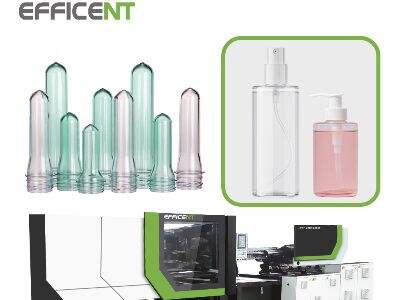
Determining Ideal Clamping Force for PET Preform
Manufacturing is not that we reach the max good- means, it’s all about finding the balance. The force applied to keep the mold closed during the injection molding process is clamping force. It is a key factor in deciding the form and quality of PET preform. The specific clamping force required for your project involves several factors, including the size and shape of the preform, as well as the material and injection pressure. It's important to nail this calculation in order to avoid defects such as warping or nonuniform thickness in the preforms.
To Specify the Clamping Force for Your PET Project
You need a few good resources available to guide you through the process. One good source of such information is the clamping force specifications and recommendations from machine manufacturers. These guides help you to compute the amount of force that is required by your press, based on its tonnage and what type of material you are working with. In addition, talking to experienced injection molding technicians and engineers may be useful in providing suggestions as to what clamping force will be best for your particular part. Computer simulation can also assist to predict the necessary force, simulating injection molding process and analyzing results with clamping force being a variable. With these resources at your fingertips, you can feel confident that your PET preform project will go off without a hitch and provide the best product possible.
When It Comes to the PET Preform Project
There are many factors which affect the clamping force calculation. This is significant because the adequate clamping force determines the formation of preforms as well as their quality level. But there have been some universal problems with determining clamping forces for PET preforms.
There are some problems frequently met when calculating the clamping force for the PET preform production:
One of the often-encountered problems in clamping force calculation for pet preform injection machine is lack of necessity test. This can lead to inferior preforms which fail to meet set quality criteria. Conversely, overestimation of the clamping force results in abrasion and waste due to wear of the apparatus as well as an increase in costs for production.
Another problem is the preform size and shape not being factored in. Various preforms may require various clamping forces according to their configuration and size. If such aspects are not taken into account, the quality of the preform becomes irregular or production problems will occur.
Various parameters of PET preform projects and the corresponding clamping force factors:
There are a number of considerations when it comes calculating clamping forces for pet preform molding machine projects. One key point is the kind of material employed to make such preforms. Various materials may require varied holding forces to be formed properly.
Furthermore, the size and the shape of the preform should be considered. Larger or more complicated preforms may have to be held for higher clamping forces to achieve these standards. The amount of clamping force may also be affected by the particular type of machinery used in production.
How to achieve precision when calculating clamping force for PET preform work
It is critical to take human error out of the equation, analyze every factor related, and calculate exactly what force will clamp a PET preform safely. The latter considerations involve the kind of material, size and shape of the preform as well as what equipment is being employed.
It is also useful to consult with specialists in the industry involved in pet preform machine manufacturing. They should be able to offer invaluable advice on what the best clamping pressure for your project will be. Also, by performing sufficient tests and adjustments on the production line, clamping force can be accurately set to obtain the best results.
In short, when planning a PET preform project it is essential to calculate the required clamping force figure in order to guarantee quality production. By solving general problems, determining important parameters, and maintaining an accuracy of prediction they can have a perfect design, producing the high quality preforms with less cost.
Table of Contents
- Determining Ideal Clamping Force for PET Preform
- To Specify the Clamping Force for Your PET Project
- When It Comes to the PET Preform Project
- There are some problems frequently met when calculating the clamping force for the PET preform production:
- Various parameters of PET preform projects and the corresponding clamping force factors:
- How to achieve precision when calculating clamping force for PET preform work