
 EN
EN

Why Demand for PET Bottles in Mexico’s Agrochemical Market Is Gradually Increasing
Meta Description:
Mexico's growing agricultural exports, increasing demand for specialty crop protection products, and improving recycling infrastructure are creating new opportunities for PET bottles in selected agrochemical packaging applications.
Why Demand for PET Bottles in Mexico’s Agrochemical Market Is Gradually Increasing
Mexico has long been recognized as one of the world's leading agricultural producers. As one of the largest exporters of avocados, tomatoes, berries, peppers, and citrus fruits, the country continues to invest heavily in improving crop productivity and expanding export capacity. Alongside these developments, the packaging industry serving the agrochemical sector is also evolving.
While high-density polyethylene (HDPE) remains the dominant material for most pesticide containers, industry participants have observed a gradual increase in the use of PET bottles for selected agrochemical products, particularly liquid nutrients, biological pesticides, adjuvants, and certain specialty crop protection formulations. Rather than replacing HDPE, PET is finding its place in applications where product presentation, lighter weight, and packaging consistency provide additional value.
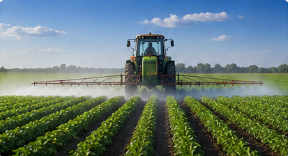
High-Value Agriculture Is Driving Packaging Innovation
Over the past decade, Mexico's agricultural industry has shifted toward higher-value crops destined for international markets. Export-oriented farming requires strict quality standards and greater investment in modern crop management practices.
Producers growing berries, greenhouse tomatoes, peppers, grapes, and avocados rely on more specialized crop protection programs than traditional field crops. As a result, demand for liquid pesticides, foliar fertilizers, micronutrients, plant growth regulators, and biological products has steadily increased.
Many of these products are supplied in relatively small package sizes, including 250 ml, 500 ml and 1-liter bottles. These smaller formats create opportunities for PET packaging, which offers an attractive appearance while remaining lightweight and durable during transportation.
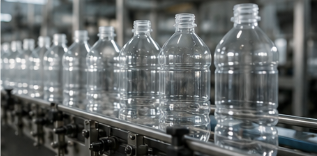
Specialty Products Are Expanding Faster Than Traditional Segments
Another noticeable trend in Mexico's agrochemical market is the growing popularity of specialty agricultural inputs.
Farmers are increasingly adopting biological pesticides, organic crop protection products, amino acid solutions, seaweed extracts, and micronutrient blends as part of integrated crop management programs. Unlike conventional herbicides that are commonly sold in larger containers, many specialty products target professional growers and are distributed in smaller retail packages.
For these applications, manufacturers often place greater emphasis on packaging quality, shelf appearance, and brand recognition. PET bottles provide excellent clarity, allowing users to easily identify product color and liquid condition while supporting premium product positioning.
Distribution Channels Are Becoming More Professional
Mexico's agricultural supply chain has changed considerably over the past several years.
Modern distributors now serve growers through nationwide dealer networks, regional cooperatives, agricultural retailers, and online sales platforms. Products frequently travel long distances before reaching farms, making packaging durability increasingly important.
Packaging must withstand transportation, warehouse storage, and repeated handling without leaking or losing its appearance. PET bottles offer good impact resistance, dimensional stability, and consistent bottle shape, helping manufacturers reduce damage during distribution while maintaining product presentation.
Sustainability Is Influencing Packaging Decisions
Environmental awareness has become an important consideration throughout Latin America's packaging industry.
Mexico has developed one of the region's strongest PET recycling systems, supported by an established collection network and recycling facilities. As more companies introduce sustainability targets, recyclable packaging materials have become an important part of long-term packaging strategies.
Although regulations for agrochemical packaging differ from those for food and beverage containers, manufacturers are increasingly evaluating packaging solutions that reduce environmental impact while maintaining product safety. PET's established recycling infrastructure makes it an attractive option for selected applications where regulatory requirements allow its use.
Branding Has Become More Important
Competition within Mexico's agrochemical market continues to intensify. Local manufacturers, multinational companies, and private-label suppliers all compete for market share.
As product performance becomes increasingly similar across many categories, packaging has become another way for companies to differentiate themselves.
PET bottles provide a smooth surface for high-quality labels and shrink sleeves, allowing brands to create a more professional appearance. Transparent packaging can also improve customer confidence by allowing users to inspect the product before purchase, particularly for liquid nutrients and biological formulations.
PET Is Not Replacing HDPE
Despite the growing interest in PET, it is important to recognize that HDPE remains the preferred material for most pesticide packaging, particularly for highly concentrated formulations that require superior chemical resistance.
Instead, PET is expanding into specific market segments where its characteristics provide practical advantages. Small-volume liquid products, premium agricultural inputs, specialty formulations, and selected biological products represent the areas where PET adoption is growing most noticeably.
This gradual shift reflects changing market demands rather than a complete transition from one material to another.
Looking Ahead
Mexico's agricultural sector is expected to remain one of the fastest-growing in Latin America. Continued investment in export agriculture, greenhouse production, precision farming, and specialty crop protection products will create new opportunities for packaging manufacturers.
For PET bottle producers, the greatest opportunities are likely to come from premium packaging solutions designed for liquid fertilizers, biological pesticides, micronutrients, plant stimulants, and other specialty agricultural products.
Although HDPE will continue to dominate the broader agrochemical packaging market, PET bottles are steadily gaining acceptance in applications where appearance, lightweight design, recyclability, and product differentiation offer meaningful advantages. As growers demand higher-quality agricultural inputs and manufacturers continue to innovate, PET packaging is expected to play an increasingly important supporting role in Mexico's evolving agrochemical industry.