 EN
EN

The Hidden Cost of Cheap PET Preform Molding Machines: Why Lower Price Often Means Higher Operating Expenses
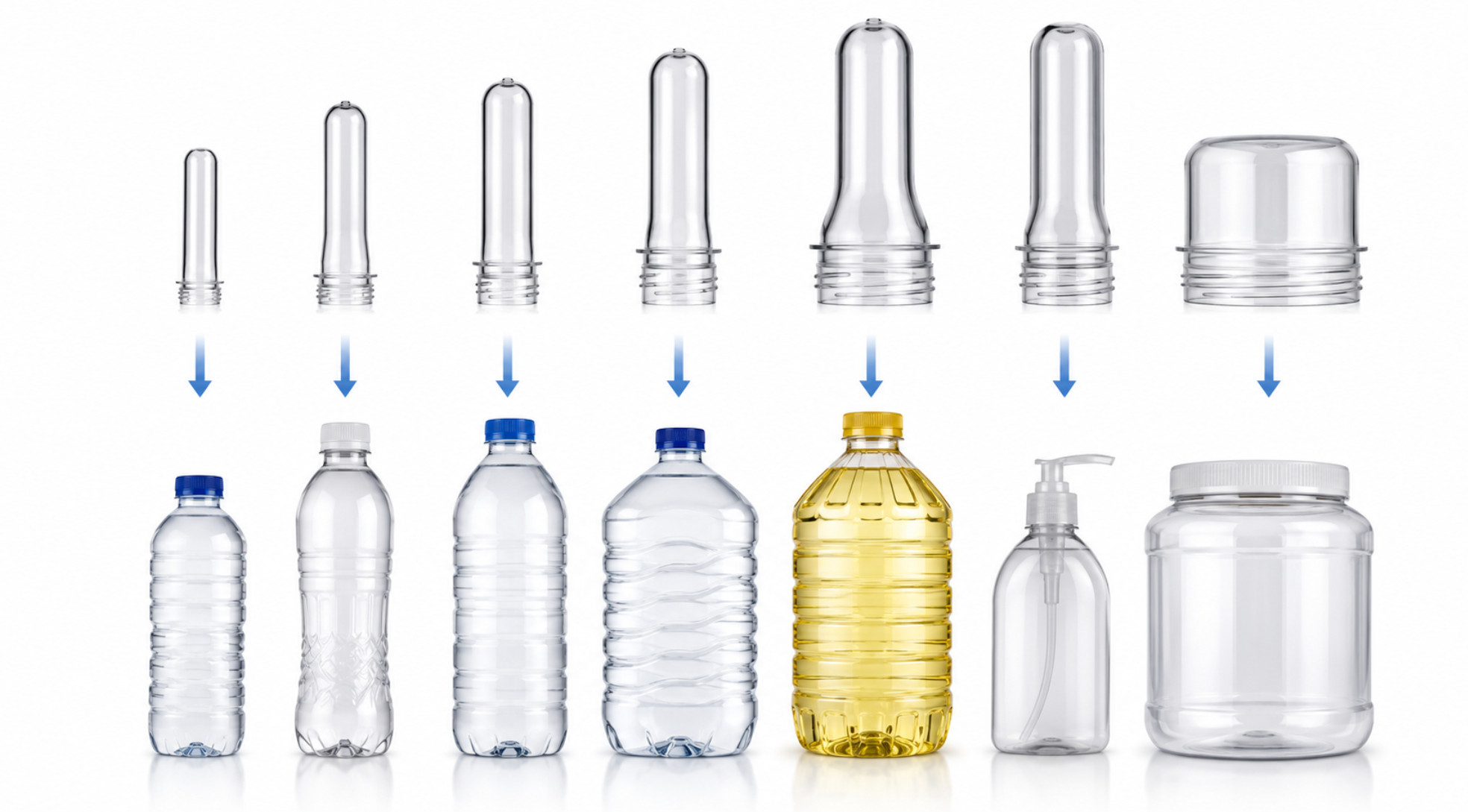
When packaging producers evaluate PET preform injection molding machines, the first question is almost always the same: "What is your price?" Sales discussions naturally revolve around the initial capital expenditure. But what happens six months, one year, or five years after the machine is installed? The real cost of a preform molding machine is not the purchase price, it is the total cost of ownership over its entire lifecycle.
In an industry where margins are tight and competition is fierce, selecting a machine based solely on the lowest quote can be a costly mistake. This article explores the hidden costs associated with cheap PET preform molding machines and explains why investing in quality equipment often delivers better long-term returns.
The Price vs. Performance Illusion
The PET preform injection molding machine market offers a wide range of price points. A 48-cavity machine from a European brand might cost three to four times more than a similar machine from a less established manufacturer. The price gap is tempting, especially for new entrants or companies expanding capacity on a budget.
However, the low purchase price often comes with trade-offs that are not immediately visible during a factory visit or equipment demonstration. These trade-offs typically manifest in areas that directly impact daily operating costs: energy consumption, cycle time stability, maintenance frequency, spare parts availability, and preform quality consistency.
Energy Consumption: The Hidden Monthly Bill
Injection molding is energy-intensive. A typical PET preform production line operates 24 hours per day, 7 days per week, often for years without interruption. Over this timeframe, even a small difference in energy efficiency can accumulate into a significant cost.
Cheaper machines often use older hydraulic technology or less efficient servo systems. While they may meet basic production requirements, they consume substantially more electricity per kilogram of preform produced. In markets where electricity costs are high or rising, this difference directly affects profitability.
Consider a real-world comparison: a high-efficiency servo-driven system can achieve energy consumption of approximately 0.16 kW·h per kilogram of preform. A less efficient conventional machine might consume 0.25 kW·h per kilogram or more. For a factory producing 10 tons of preforms per day, the daily energy cost difference can exceed US100.Overoneyearofcontinuousoperation,thisamountstooverUS100.Overoneyearofcontinuousoperation,thisamountstooverUS 36,000 in additional electricity costs. In five years, the difference exceeds US$ 180,000, easily surpassing the initial price gap.
Cycle Time: The Productivity Factor
Cycle time is the heartbeat of preform production. Every fraction of a second saved in cooling time, injection speed, or mold opening translates directly to more preforms per hour, more output per day, and lower cost per unit.
Cheaper machines often lack the advanced control systems, optimized hydraulic circuits, or precision mold alignment mechanisms needed to achieve the shortest possible cycle times. They may run reliably, but they run slower. While a difference of 1-2 seconds per cycle might seem small, in high-volume production it represents a significant capacity loss.
For example, a machine running a 48-cavity mold with a 10-second cycle produces 17,280 preforms per day. If a more advanced machine can achieve a 9-second cycle, the same machine produces 19,200 preforms per day, representing a 11% increase in output without any additional floor space, labor, or overhead investment. Over time, this difference can mean hundreds of thousands of dollars in lost revenue.
Preform Quality and Material Waste
Perhaps the most insidious cost associated with cheap machines is poor preform consistency. If the injection unit lacks precision, if the clamping system is not rigid enough, or if the temperature control is unstable, the resulting preforms will show variations in weight, wall thickness, intrinsic viscosity (IV) degradation, and dimensional accuracy.
Inconsistent preforms lead to downstream problems: blow molding failure, uneven bottle wall thickness, excessive trimming waste, and rejected finished bottles. These quality issues do not just represent lost production, they represent wasted raw materials, wasted energy, wasted labor, and wasted machine time. In some cases, the material waste alone can exceed the energy cost savings that seemed attractive at the time of purchase.
Brands are increasingly demanding tighter specifications for preform weight and visual quality. A machine that cannot reliably produce preforms within these specifications will quickly become a bottleneck to customer satisfaction and repeat orders.
Maintenance Costs and Unplanned Downtime
When evaluating a machine, buyers often overlook the availability and cost of spare parts. Cheap machines frequently use off-the-shelf components that may have shorter service life or limited availability. Hydraulic pumps, sealing rings, heater bands, and control modules may require more frequent replacement.
More importantly, when a critical component fails, the cost of downtime can far exceed the cost of the part itself. A three-day shutdown waiting for spare parts to arrive can cost thousands of dollars in lost production, plus the labor cost of the maintenance team waiting on site, plus the potential loss of customer confidence if delivery schedules are missed.
Quality machines from established manufacturers are designed with reliability and serviceability in mind. They use proven components with known service intervals, maintain global spare parts inventories, and provide responsive technical support. The premium paid for these machines is not just for the equipment itself, but for the reassurance that production will continue uninterrupted.
Labor Efficiency and Automation
Modern PET preform machines increasingly incorporate automation features: robotic preform take-out, conveyor integration, palletizing systems, and data monitoring platforms. These features reduce the labor required per ton of production, allowing skilled workers to focus on quality control, process optimization, and maintenance rather than routine manual handling.
Cheaper machines often lack these automation options or offer them as expensive add-ons. In markets where labor costs are rising, this disadvantage compounds over time. A machine that requires two operators per shift versus a machine that requires one operator per shift adds significant cost over a five-year period. When multiplied across three shifts, 365 days per year, the labor cost difference is substantial.
Long-Term Supplier Support
The relationship with the machine supplier does not end at delivery. Process optimization, troubleshooting, training, and upgrades are all part of the long-term partnership. Established manufacturers invest in technical support infrastructure, maintain local service engineers in key markets, and provide ongoing training for customer personnel.
A supplier offering a cheap machine may not have the same level of support. When problems arise, the buyer may be left to solve them alone, relying on trial and error rather than expert guidance. This is particularly risky for producers introducing new products, changing materials, or expanding into new markets.
The Total Cost of Ownership Calculation
To make an informed decision, buyers should calculate the total cost of ownership (TCO) over the expected life of the machine, typically 5-10 years. The TCO includes:
Purchase price
Installation and commissioning costs
Energy costs over the machine's life
Maintenance and spare parts costs
Downtime costs due to equipment failure
Labor costs
Raw material waste
Quality-related losses
Training and technical support
When all these factors are considered, the cheapest machine is almost never the most cost-effective choice. A machine costing 20% more upfront can easily deliver 30-40% lower operating costs over its lifetime. This is why sophisticated buyers are focusing on cost per preform rather than machine price.
Industry Trends and Buyer Behavior
At recent industry exhibitions, leading manufacturers have been emphasizing this total cost message. Energy efficiency ratings, cycle time data, preform weight consistency, and service agreements are becoming key selling points alongside price. Buyers are increasingly asking for detailed energy consumption data, expected maintenance schedules, and cost-per-thousand-preform calculations.
This shift reflects growing sophistication in the packaging industry. As competition intensifies, producers cannot afford to sacrifice efficiency for upfront savings. The hidden costs of cheap equipment eventually surface, and when they do, they can undermine the competitiveness of the entire operation.
Making a Smarter Decision
For packaging producers evaluating PET preform molding machines, the recommendation is clear: look beyond the purchase price. Consider the full lifecycle cost of the equipment and its impact on daily operating expenses. Visit references who have operated the machine for at least one year. Ask about actual energy consumption, maintenance history, and preform quality consistency. Review the supplier's spare parts policy and technical support capabilities.
Remember that the best machine is not the cheapest or the most expensive, but the one that delivers the lowest total cost per preform over the expected production life. This is the measure that truly matters for the long-term health of any packaging manufacturing business.
Conclusion
The market for PET preform injection molding machines offers many choices at various price points. While the initial purchase price is always an important consideration, buyers who focus only on this number often overlook significant hidden costs that accumulate over the lifetime of the equipment.
Energy consumption, cycle time efficiency, preform quality consistency, maintenance requirements, and supplier support all contribute to the real cost of production. A seemingly low-priced machine may save money at the time of purchase but cost far more in higher energy bills, wasted material, lost production time, and increased labor expenses.
In today's competitive packaging industry, success depends on efficient, reliable, and cost-effective production. That requires making investment decisions based on total cost of ownership rather than just the initial sticker price. The hidden cost of cheap machines is real, and the smartest buyers are learning to measure it.