
 EN
EN

8-Cavity 5-Gallon Water Bottle Preform Project: 743 g Preform with a 123-Second Cycle Time
We recently completed a 5-gallon water bottle preform injection molding project designed for the production of 743 g PET preforms.
The project uses an 8-cavity mold, allowing eight preforms to be produced in each molding cycle. After installation, commissioning, and process optimization, the production cycle was stabilized at approximately 123 seconds.
This project demonstrates our capability to provide reliable production solutions for large-weight PET preforms, where injection capacity, plasticizing performance, mold balance, cooling efficiency, and process stability are especially important.
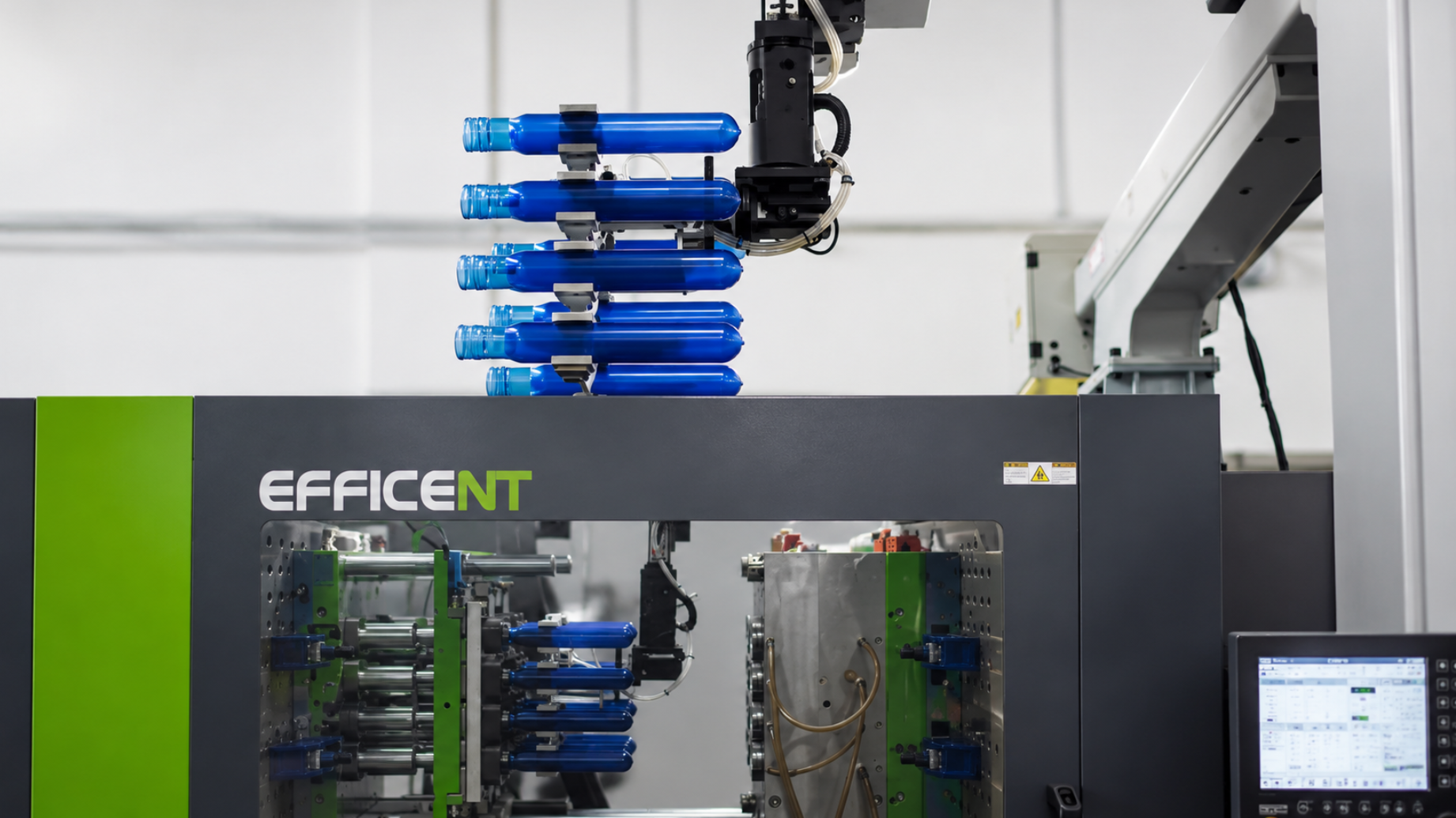
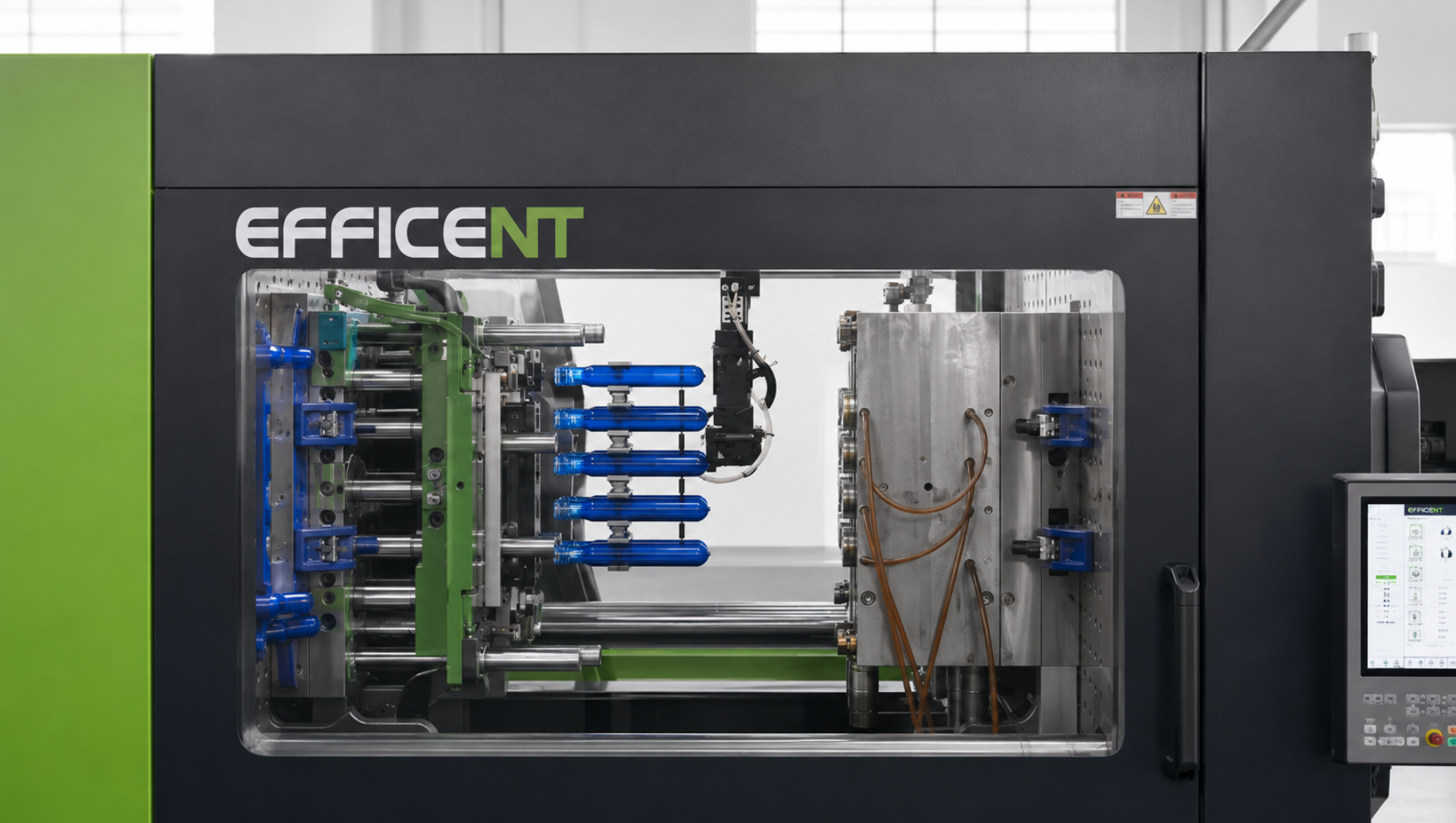
Main Project Specifications
Product: 5-gallon water bottle preform
Preform weight: 743 g per piece
Mold configuration: 8 cavities
Output per cycle: 8 preforms
Cycle time: approximately 123 seconds
Application: production of 5-gallon water bottles
Based on a 123-second cycle time, the system can complete approximately 29 production cycles per hour, providing a theoretical output of around 234 preforms per hour.
Actual production capacity may vary depending on the raw material condition, cooling-water temperature, ambient temperature, machine settings, automation system, and operating conditions.
Higher Requirements for Heavy PET Preforms
A 743 g preform is significantly heavier than a conventional PET bottle preform.
With eight cavities, the total product weight injected during each cycle is approximately 5.94 kg, excluding the additional material required for the runner system and process allowance. This places high demands on the injection unit, screw plasticizing capacity, melt uniformity, and overall machine stability.
The machine must not only deliver a large shot volume but also ensure that all eight cavities are filled evenly.
Injection speed, injection pressure, holding pressure, holding time, back pressure, melt temperature, and cooling conditions must be carefully adjusted according to the product design and PET material characteristics.
Insufficient plasticizing capacity or unstable injection control may lead to problems such as:
- Uneven preform weight
- Incomplete filling
- Flash
- Bubbles
- Silver streaks
- Whitening at the preform bottom
- Excessive internal stress
- Deformation after demolding
For this reason, heavy multi-cavity preform production requires close coordination between the injection molding machine, mold, cooling system, and processing parameters.
8-Cavity Mold for Higher Production Efficiency
The project adopts an 8-cavity mold, producing eight 5-gallon preforms in one injection cycle.
Compared with single-cavity, 2-cavity, or 4-cavity solutions, the 8-cavity configuration significantly improves production efficiency and increases output per machine cycle.
For customers with stable orders and continuous production requirements, a multi-cavity system can help reduce the machine operating time, labor cost, and energy consumption allocated to each preform.
However, increasing the number of cavities also creates higher requirements for:
- Hot-runner balance
- Mold cooling performance
- Clamping stability
- Injection repeatability
- Cavity-to-cavity weight consistency
During the project-planning stage, we consider the customer’s required output, product weight, power supply, cooling capacity, plant layout, and downstream bottle-blowing capacity.
This helps ensure that the injection molding line and bottle-blowing line operate with properly matched production capacities.
Stable 123-Second Molding Cycle
After machine commissioning and process optimization, the production cycle was stabilized at approximately 123 seconds.
A complete production cycle includes mold closing, injection, pressure holding, cooling, mold opening, and preform removal.
For a 743 g heavy preform, cooling is one of the most important factors affecting the total cycle time.
If the cooling time is too short, the preform may deform after demolding, retain excessive heat, or develop dimensional instability. If the cooling time is too long, production efficiency decreases and energy consumption per product increases.
Our engineers optimized the injection, holding, and cooling parameters according to the preform weight, wall-thickness distribution, mold cooling-channel design, and actual machine operating conditions.
The objective was to achieve a suitable balance between product quality and production efficiency.
Consistent Weight and Wall-Thickness Distribution
After injection molding, the preforms are reheated and blow-molded into finished 5-gallon water bottles.
Therefore, the quality of the preform directly affects the performance of the final bottle, including:
- Bottle transparency
- Wall-thickness distribution
- Mechanical strength
- Bottom formation
- Impact resistance
- Service life
During commissioning, special attention was given to cavity balance and preform consistency.
The main control points included:
First, maintaining balanced material flow across all eight cavities to minimize cavity-to-cavity weight differences.
Second, controlling the PET drying temperature and drying time to reduce defects caused by excessive moisture in the raw material.
Third, optimizing injection and holding-pressure settings to prevent short shots, shrinkage, flash, and excessive internal stress.
Fourth, inspecting the preform neck, thread, support ring, body, and bottom to ensure reliable performance during the subsequent bottle-blowing process.
Complete Matching of Machine, Mold, and Auxiliary Equipment
A stable 5-gallon preform project involves more than simply installing a mold on an injection molding machine.
The injection molding machine, preform mold, dehumidifying dryer, chiller, air system, material-feeding system, automation equipment, and downstream bottle-blowing machine must work together as one complete production system.
Based on the customer’s preform drawing, product weight, mold cavity number, and required output, we evaluate the following machine parameters:
- Injection capacity
- Plasticizing capacity
- Clamping force
- Screw design
- Mold dimensions
- Cooling requirements
- Auxiliary equipment configuration
A properly matched solution helps prevent problems caused by insufficient injection capacity, incompatible mold dimensions, inadequate cooling, or incorrectly selected auxiliary equipment.
Project Summary
This project successfully achieved the stable production of 743 g 5-gallon water bottle preforms using an 8-cavity mold and a molding cycle of approximately 123 seconds.
The project highlights the technical requirements involved in producing large-weight, multi-cavity PET preforms, including strong plasticizing capacity, accurate injection control, balanced hot-runner design, efficient mold cooling, and stable machine performance.
Through proper equipment selection, mold design, auxiliary-system configuration, and process commissioning, the production line can deliver consistent preform quality and reliable output for the subsequent manufacture of 5-gallon water bottles.
We are committed to providing customers with complete PET preform production solutions, including injection molding machines, preform molds, auxiliary equipment, technical support, installation, commissioning, and after-sales service.